

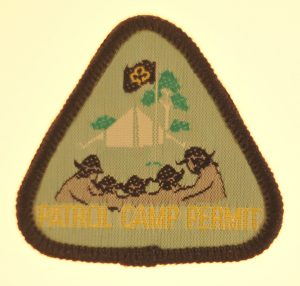
Patrol Camp Permit
From the 1988 Badge Book:
This permit shows that you are able to run a patrol camp.
Qualifications for taking the Permit Assessment:
Be 12 1/2, 13 or 14 years old. Have camped in guide camps at least 14 days. These should include a practice patrol camp. Hold the Camping Skills and Camp Cooking badges. Be recommended by your Patrol Leaders’ Council. On completion you will be presented with a green lanyard.
The Permit Assessment
This takes the form of a patrol camp which you must organise and run. This includes planning and using the time so everyone can enjoy all you do. You will need to show responsibility for the safety and welfare of the girls in your care.
- Organise and run a patrol camp. Be responsible for the choice and care of equipment (including tents) and the clearing of the site.
- Prove your ability to keep bedding and clothing aired and dry.
- With the patrol plan the menu, arrange the purchase of food, show a practical knowledge of the storage of food, cooking and serving of meals. Know and observe the fire precautions as they apply in your State.
- Fit up a small first aid kit suitable for a patrol camp and show ability in dealing with emergencies such as cuts, grazes, serious bleeding, burns, scalds and snakebites.
- Plan and run your program so the guides are happily occupied throughout the camp and advantage is taken of the surroundings through some form of bushcraft activities and/or games.
- Understand the importance of boating and swimming rules and that these activities are not permitted unless a qualified adult, approved by the commissioner, is in charge.
Conditions for Patrol Camps
- You may take your whole patrol to camp, but if girls from another patrol are included, the maximum number is to be six (including yourself).
- The maximum duration of a patrol camp should not exceed three nights.
- Each guide must have an indemnity form and camp permission slip signed by her parent or guardian.
- The camp must be in private grounds approved by GGV. The camp is to be within call of a guide leader holding a camping qualification (this is likely to be your own guide leader). In some instances a patrol may be given permission to camp within call of a responsible adult who will help in case of illness or emergency.


Find us on social media